How Installing Forest Green Tile Transforms Dark Kitchen Cabinetry
Stepping into a kitchen with dark cabinets often feels dramatic, yet many homeowners find these spaces can appear heavy or closed in. If you’re looking for a way to refresh and enliven your kitchen without replacing cabinetry, the right backsplash can make all the difference. Installing deep green tile, specifically chosen to complement the tones of dark wood or painted units, creates a visually rich contrast that enhances both color and texture in the room. The resulting transformation balances depth with vibrancy, making the kitchen feel both sophisticated and inviting.
This strategic use of a Forest Green Tile kitchen backsplash addresses more than just color; it introduces a layer of tactile interest and reflective quality. The interplay between tile and cabinetry changes how light moves through the space, bringing new life to an area that might otherwise feel static. Whether your kitchen style is classic or modern, the addition of a green tile feature wall brings warmth, personality, and a sense of connection to the outdoors.
Aesthetic Synergy Between Forest Green Tile and Dark Cabinets
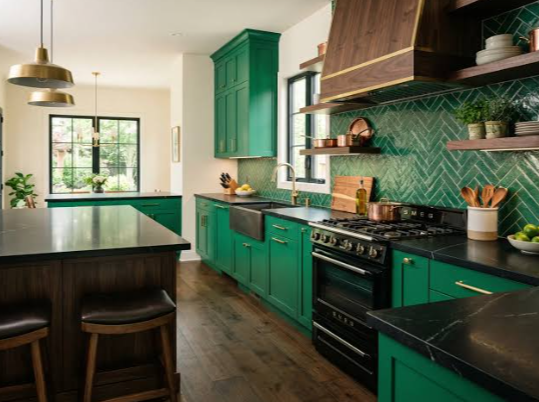
Pairing deep green tiles with dark kitchen cabinetry achieves a harmony that feels intentional and curated. For example, matte-finished tile set against midnight blue or espresso cabinets produces a subtle interplay of light and shadow, allowing each element to enhance the other. Homeowners often select elongated subway tiles or hexagon shapes in this color, which provide a modern edge while remaining versatile across design styles.
The synergy between these color choices is more than visual; it’s about creating a layered look where neither surface overpowers the other. Using a Forest Green Tile as a feature wall or backsplash draws the eye upward, breaking up the dominance of dark cabinetry and giving the kitchen a more dynamic profile. This accent wall approach is especially impactful behind a stove or sink, where it naturally frames focal points.
Designers recommend keeping hardware and fixtures in brushed metal or matte black finishes to reinforce the cohesive, upscale atmosphere. By aligning these details, the overall effect feels unified and deliberate rather than piecemeal or busy.
Reflective Surfaces and Lighting Dynamics in Moody Kitchens
The reflective properties of glazed green tile can dramatically influence how light behaves in kitchens with dark cabinetry. Even a single row of glossy tile above a countertop bounces ambient and task lighting throughout the room, making the space appear brighter without sacrificing its moody elegance. These surfaces work particularly well in spaces with limited natural light, as they amplify whatever illumination is available.
Choosing a Forest Green Tile kitchen backsplash with a high-gloss finish can help distribute light evenly, preventing dark corners from feeling oppressive. By placing under-cabinet lighting or pendant lights near the backsplash, you can further enhance the interplay between light and surface, drawing attention to the tile’s color variations and subtle texture. This approach is supported by guidance on lighting strategies for kitchens with dark finishes, which recommend leveraging reflective materials to keep spaces vibrant.
Layering light sources—from recessed ceiling fixtures to wall-mounted sconces—creates a multi-dimensional effect, making both the cabinetry and tile pop. The result is a kitchen that feels alive and thoughtfully composed at any time of day.
Material Selections and Backsplash Design Patterns for Modern Spaces
Material choice plays a critical role in how a green tile backsplash interacts with dark cabinetry. Ceramic and porcelain tiles are favored for their durability and ease of maintenance, while handmade or artisan options introduce organic variation that complements the natural undertones of wood or painted cabinets. Selecting a tile with a subtle crackle or variegated glaze adds depth and prevents the backsplash from feeling flat.
Design patterns also shape the overall impression of the kitchen. Herringbone and vertically stacked tiles offer a contemporary edge, while classic subway arrangements provide timeless appeal. The grout color can subtly shift the mood: dark grout emphasizes pattern and adds a graphic quality, while light grout softens the transition between tile and cabinetry. Comparing backsplash layout patterns for modern kitchens helps readers choose a style that aligns with their vision.
For homeowners seeking a bold statement, extending the green tile behind open shelving or up to the ceiling visually expands the room. This technique draws the eye upward and frames the cabinetry, making the entire space feel more open and unified.
Color Psychology and Natural Elements in Contemporary Interior Design
Deep green hues bring a sense of calm and renewal, which is why they are increasingly popular in contemporary interiors. In kitchen design, this color draws from nature, creating a tranquil environment that offsets the formality of dark cabinetry. A Forest Green Tile kitchen backsplash does more than add color; it introduces an organic element that makes the space feel grounded and harmonious.
Incorporating living plants, wooden accessories, or stone countertops alongside green tile reinforces the kitchen’s connection to the outdoors. This focus on natural materials and tones supports an overall sense of wellbeing—a key priority in modern home design. The psychological effect of green is well-recognized, with many designers using it to foster a peaceful, welcoming atmosphere in spaces where families gather and spend time.
By intentionally layering these elements, the transformation is not just visual but emotional, providing a kitchen that feels restorative and deeply personal.
Conclusion
If your kitchen feels too dark or closed in, consider introducing a feature wall or backsplash in deep green tile as your next update. Start by collecting samples of both tile and cabinet finishes to see how they interact in your own space before committing to a full installation. This hands-on approach ensures the final result delivers the visual depth and inviting atmosphere you want from your kitchen transformation.