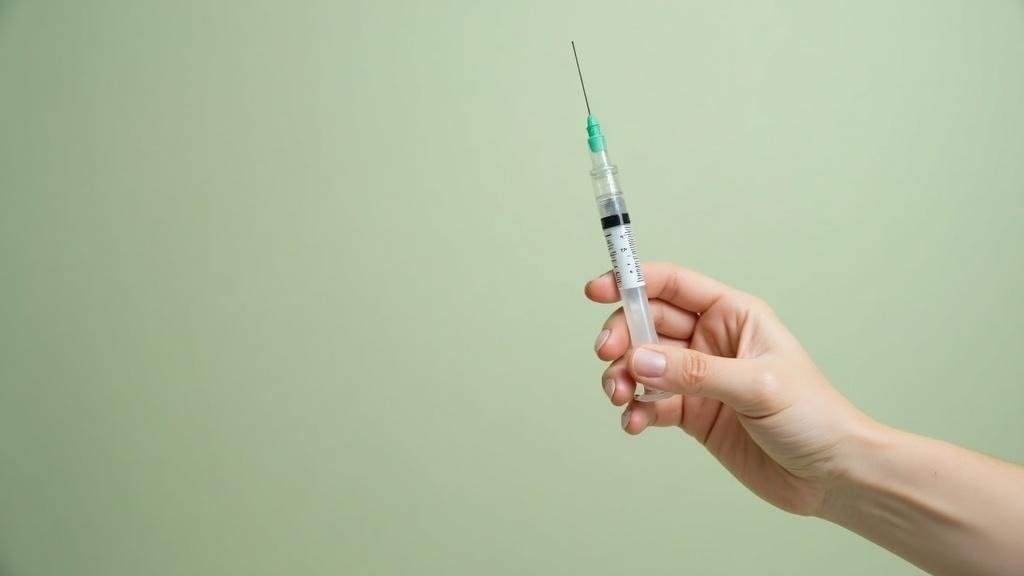
The 5 mcg-to-Units Calculators I Actually Recommend When Someone’s Staring at a Vial They Don’t Understand
For beginners, the hard part is rarely the formula itself. It is translating a provider’s dose into the real-world syringe mark after reconstitution, without mixing up units along the way.
1. FormBlends Peptide Calculator
This one earns the top spot for a specific reason: the math is visible. Most calculators give you an answer and ask you to trust it. This one shows every step, so if you made a typo entering your water volume, you can catch it before you draw anything.
The tool is free, needs no account, and lives on the web and inside the FormBlends mobile app. You put in how much peptide is in the vial, how much BAC water you added, and the dose you’re aiming for per injection. It returns the concentration per mL, the exact units to pull into the syringe, and a visual fill bar showing where that sits on the barrel. That last part sounds minor. It isn’t when you’re working with a 1 mL syringe and trying to land on 14 units at midnight.
It handles U-100, U-50, and U-40 syringes, which matters because not everyone is using the standard U-100. There are one-tap presets for BPC-157 (5 mg and 10 mg vials), TB-500, ipamorelin, tesamorelin, and GLP-1 compounds, but the underlying engine works for any lyophilized peptide since the reconstitution formula is the same regardless of what’s in the vial.
The mg-to-mcg conversion is handled automatically. That 1,000x difference between milligrams and micrograms is the single most dangerous math error in this space. People draw ten times their intended dose because they forgot to convert. The calculator makes that specific mistake structurally impossible.
FormBlends is a real telehealth and compounding pharmacy company, not an anonymous webpage. That doesn’t mean you skip verifying the math yourself, but it does mean there’s a company accountable for what the tool says.
Worth being clear about what this tool actually does: you supply the dose your provider prescribed, and it converts that into a syringe measurement. Deciding what dose to take is not part of what it offers.
2. PeptideFox
PeptideFox supports more than 30 individual peptides and does something slightly different from most: it helps you pick a BAC water volume that produces a clean, easy-to-read draw on a standard syringe. That’s genuinely useful. Drawing 7.3 units is harder to eyeball than drawing 10. A visual guide on the page walks through what the filled syringe should look like. Good for visual learners.
3. PeptideDeck
Simple three-field interface. Enter the vial’s mg content, the mL of BAC water you added, and your target dose in mcg. It outputs concentration and the volume to draw, expressed in both mL and insulin units. No extras. No account. It works.
The thing I like about PeptideDeck is that it forces you to think in concrete inputs rather than selecting from a dropdown. If your peptide isn’t a common preset, you’re not stuck.
4. LeadWest Medical Calculator
LeadWest covers a solid range of peptides including retatrutide, tesamorelin, sermorelin, GHK-Cu, and several others that don’t appear on every list. For anyone working with less common compounds, that coverage is the main draw. The tool reads more clinical than most.
5. MyPeptideMatch
Free, no login, and covers both older healing peptides like BPC-157 and TB-500 and newer GLP-1 class compounds including semaglutide and tirzepatide. That dual coverage in one place is the reason this one keeps appearing in forum recommendations. It isn’t the most polished interface, but it handles the math correctly and doesn’t require any account setup.
A Quick Note on How These All Work
Every calculator here is doing the same arithmetic. Divide your target dose by the concentration you made (dose in mcg divided by mcg per mL), then convert that volume to insulin units based on which syringe you’re using. On a U-100 syringe, 1 mL equals 100 units, so 0.1 mL is 10 units. Adding more water to a vial does not change how much peptide is in there. It only changes how many units you draw to get the same dose. All five tools above reflect this correctly.
A Word Before You Use Any of Them
These are measurement tools. None of them know your weight, your health history, or what a qualified prescriber would recommend for your situation. Getting the unit math right is important. Getting the dose from a real provider first is more important. Use these to translate a prescription into a syringe measurement, not to decide what to inject.
Common Questions
Does it matter which calculator you use if they’re all doing the same math?
Mostly no, but the interface affects real-world error rates. FormBlends shows its work step by step, which makes typos catchable before you draw. PeptideFox nudges you toward BAC water volumes that produce round, easy-to-read unit numbers. If you’re new to reconstitution, those design choices matter more than the underlying formula.
Why does the FormBlends calculator list U-40 and U-50 syringes when most people only use U-100?
U-40 syringes are standard in several countries outside the US and still appear in veterinary supply chains. If you accidentally use a U-40 syringe with U-100 math, you draw 2.5 times your intended dose. Selecting the wrong syringe type is one of the more common errors in peptide forums, so a calculator that asks you to specify matters.
Can I use PeptideDeck or MyPeptideMatch for semaglutide and tirzepatide, or are those only for older peptides?
MyPeptideMatch explicitly covers semaglutide and tirzepatide alongside BPC-157 and TB-500. PeptideDeck uses a manual entry system, so it will calculate any compound you type in, including GLP-1 class drugs, as long as you know your vial’s mg content and your target dose. Neither tool prescribes doses.
What happens to my calculation if I accidentally add too much or too little BAC water to the vial?
The concentration changes, and so does the number of units you need to draw. That’s exactly the variable these calculators solve for. If you added 3 mL instead of 2 mL to a 5 mg vial of BPC-157, just enter 3 mL into the water field and recalculate. The peptide amount in the vial stays fixed regardless of how much water you used.
Is LeadWest the only calculator here that covers retatrutide, or do the others handle it too?
Based on publicly available feature information, LeadWest is the only one in this list that specifically names retatrutide as a supported compound. PeptideDeck would technically work for it through manual entry since you’re just inputting vial mg and target mcg, but it won’t have a named preset. If you’re working with less common compounds regularly, LeadWest’s broader named coverage is the practical reason to keep it bookmarked.
Sources
- U-100 insulin syringe specification: standard 100 units per 1 mL, FDA labeling conventions
- PeptideFox feature descriptions: peptidefox.com (public, reviewed 2025)
- PeptideDeck interface: public web tool, reviewed 2025
- LeadWest Medical calculator: public web tool, reviewed 2025
- MyPeptideMatch: public web tool, reviewed 2025
- General reconstitution math: standard pharmaceutical compounding reference (lyophilized peptide reconstitution)