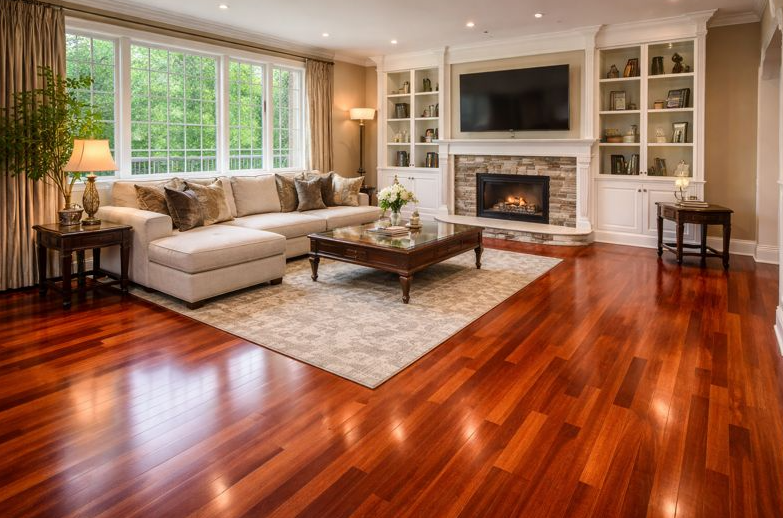
Wide Plank Hardwood Pros And Cons Before You Buy
Wide plank hardwood has the same energy as a big, beautiful couch. It looks amazing in photos, it can transform a room, and it also comes with a few “let’s be realistic” details that matter a lot once you live on it.
If you’re shopping for wide planks, you’re usually chasing that modern, open, high-end look. Totally valid. But wide boards behave differently than narrower boards because wood moves, and wider boards give that movement more room to show up.
Let’s break down the real pros and cons before you buy, in a way that helps you avoid regret.
First, what counts as “wide plank.”
People use the phrase loosely, but most installers start calling a floor “wide plank” once you hit around five inches and up. Six, seven, eight, even ten inches shows up a lot now. The wider you go, the more the look changes, and the more the technical side matters.
Why wide planks look so good
Wide planks make a room feel calmer. You see fewer seams, fewer lines, less “busyness.” That’s the whole visual magic.
They also let the wood grain shine. With narrow strips, your eye jumps board to board. With wide planks, you actually notice character, knots, and cathedral grain patterns. That can look rich and natural, especially in white oak and walnut.
Wide planks also fit modern interiors well. If you like clean lines, minimal furniture, big windows, and open layouts, wide plank floors feel like they belong.
If your home has an older traditional vibe, wide planks can still work. You just need to pick the right species, stain, and finish so the floor doesn’t feel like it wandered in from a different decade.
The biggest “con” is movement, and it’s not optional
Wood expands and contracts with humidity. That’s true for all hardwood, but wide boards show movement more.
When a board gets wider, it has more tangential movement across its width. That can lead to visible seasonal gaps in dry months, and it can increase the risk of cupping if moisture comes from below or the home’s humidity swings wildly.
This doesn’t mean wide planks are a bad idea. It means they demand better planning.
If your home stays fairly stable year-round, wide planks behave much better. If your humidity swings hard, wide planks will let you know. Loudly. Like a floor with feelings.
Engineered wide planks usually beat solid wide planks in real homes
Solid wide plank exists, and they can look incredible. But solid wide boards bring more risk because the whole thickness of the board moves as one piece.
Engineered wide plank floors stay more stable because their layered construction helps resist movement. That’s why you see so many wide plank products in engineered formats, especially in widths over six inches.
If you love wide planks and you live on a concrete slab, in a coastal climate, or in a home where humidity isn’t steady, engineered wide planks often make the most sense.
Subfloor prep matters more than you think
Wide planks demand a flatter subfloor because the boards span more distance. Any dip or hump can create hollow spots, rocking, or gaps along the edges. That leads to squeaks, stress on joints, and an install that doesn’t feel solid.
A good installer will check flatness carefully and fix the subfloor before they start. If someone wants to “let the floor settle,” they’re not talking about the floor. They’re talking about your expectations.
See also: Simple Parenting Habits That Support Long-Term Child Well-Being
The installation method can make or break the result
Wide planks often need more support in the installation method. Depending on the product, pros may use nail-down, glue-down, or a combo approach.
Some wide solid installs benefit from adhesive assist to reduce movement and squeaks. Some engineered wide planks do best as glue-down over concrete. Floating wide planks can work, but they can sound hollow if you don’t choose the right underlayment and if the subfloor isn’t flat.
This is one of those times where “cheapest install quote” can become “most expensive regret.”
Wide planks can show imperfections more
Because wide planks create big visual fields of wood, they can highlight issues like lippage, uneven seams, or inconsistent leveling. A tiny height difference between boards looks more obvious when the boards are wide and the seams are long.
Wide planks also make the grain pattern more prominent. That’s usually a pro, but if you hate knots or dramatic variation, wide planks can feel too “busy” up close even though they look calm from a distance.
Your taste matters here. Some people want it perfectly uniform. Other people want “this looks like a real tree and I love it.”
Cost can rise fast
Wide planks often cost more than narrow planks because they require different milling, higher-grade logs, and more careful manufacturing. You may also pay more for installation because of subfloor prep, adhesives, and the skill level needed.
That doesn’t mean wide planks always cost more. Some brands price aggressively. But in general, the wider you go, the more you should expect the project cost to climb.
The smarter way to think about it is value. If the wide plank look is what you really want, paying a bit more for stability and good installation is usually cheaper than paying twice.
Repairs can be a little trickier
If you ever need to replace a damaged board, wide planks can make the repair more noticeable, especially if the floor has a lot of character variation or if the stain has aged.
That’s not a deal-breaker. It’s just reality. A good installer can make repairs blend well, but matching wood tone and finish over time can get tricky.
If you choose a very dark stain or a high-gloss finish, repairs and scratches show more. If you choose a natural or medium tone with a matte or satin sheen, life gets easier.
Wide planks can increase the “premium” feel of your home
This is a real pro. Wide plank floors read upscale to many buyers because they’re common in higher-end remodels and newer luxury builds.
If resale value matters, wide planks can be a visual upgrade, especially when you choose a timeless tone and a quality finish.
Just avoid super-trendy extremes that could date the home. A natural white oak or a neutral mid-tone tends to age better than very gray or very orange looks.
How to decide without overthinking yourself into a coma
Wide planks make sense when you want a cleaner, more modern look and you’re willing to respect wood’s need for stability.
They make even more sense when you choose engineered construction for wider widths, especially in real-world conditions like concrete slabs or humidity swings.
They can be a bad fit when your home has moisture issues, your HVAC isn’t consistent, or you’re working with a contractor who doesn’t take subfloor prep and moisture testing seriously.
If you do one thing before you buy, make it this: choose the product based on your home’s conditions, not just the photo you liked. Wide plank is a vibe. But it’s also math, physics, and moisture.
When you get both right, wide planks look incredible and feel timeless. When you ignore the technical side, they turn into a seasonal art installation called “Gaps, Creaks, and Regret.”
Article by: FlooringTitan.com