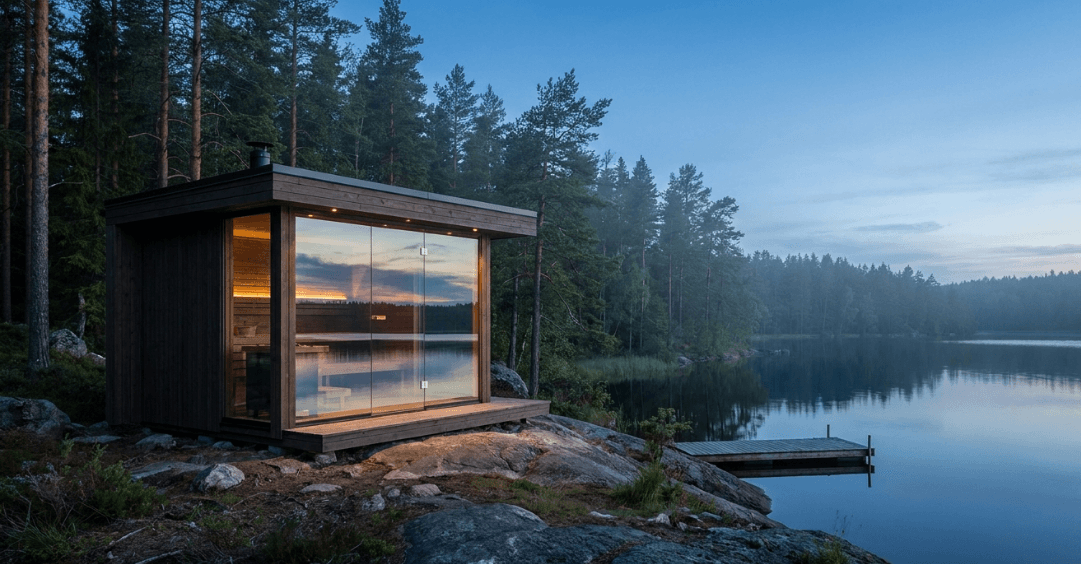
What Should You Look For When Buying an Outdoor Sauna for a Small Space in 2026?
For a small yard, patio, or narrow side lot, the criteria that matter most are footprint (a two-person barrel or cube can fit in as little as 16 to 25 square feet), heater wattage matched to that smaller volume, a door that swings clear of a fence line or setback, and confirmation of local permit rules before ordering. Getting these right upfront avoids the two most common small-space mistakes: a heater sized for a larger room that overheats a tiny one, or a unit that does not actually clear the property line once it arrives on site.
How Much Floor Space Does a Small Outdoor Sauna Actually Need?
A compact one- or two-person barrel or cube typically has an interior footprint of roughly 16 to 25 square feet, but the number that actually matters for a small lot is the total footprint including clearance, since most codes and manufacturers call for space around the unit for the door swing, roof overhang, and vent airflow. A realistic planning number for a two-person unit is closer to a 6 by 6 foot area once that clearance is included, even though the interior itself is considerably smaller. Measuring the actual available space, not just eyeballing it, before comparing models saves a returned order later. A tape measure and a piece of chalk or painter’s tape to mark out the footprint on the actual ground, including the swing radius of the door, gives a far more accurate sense of fit than picturing it from a product listing’s dimensions alone.
What Heater Wattage Fits a Compact Sauna Without Overheating It?
Heater sizing scales with room volume, not just floor area, so a smaller interior generally pairs with a lower-kW heater than a full-size cabin would need. An oversized heater in a small room heats too fast and too unevenly, often overshooting comfortable temperature near the heater while the far corners lag behind, and it draws more power than the space requires. Manufacturers publish a recommended kW range for each model’s interior volume, and matching that figure rather than defaulting to the largest heater available is worth the extra few minutes of spec-sheet reading.
Do Setback and Property-Line Rules Apply to a Backyard Sauna?
In most municipalities, yes. A structure over a certain size, or one with a dedicated electrical circuit, commonly falls under the same setback rules that apply to a shed or detached structure, often requiring several feet of clearance from a fence or property line. These rules vary significantly by city and county, so a quick call to the local building or zoning department before ordering is worth doing, particularly on a small lot where a few feet of required setback can meaningfully limit where the unit can actually sit.
Is a Two-Person Barrel or a Compact Cube Better for a Tight Yard?
Both fit a small footprint, but they use it differently. A cube or cabin shape has flat interior walls that make full use of the floor area for bench space, while a barrel’s curved sides look distinctive but reduce usable width at bench height compared with its overall footprint. For a genuinely narrow side yard, a cube’s rectangular shape often tucks against a wall more efficiently, while a barrel tends to look and feel more at home as a freestanding feature with open space on multiple sides.
What Foundation Works on a Small Patio or Deck?
A compact sauna’s lighter overall weight compared with a full cabin means a small unit can often sit on an existing concrete patio or a reinforced deck section without a dedicated poured pad, provided the surface is level and the deck’s load rating supports the unit plus occupants. Checking the manufacturer’s foundation requirements against the specific surface available, rather than assuming any flat patio will work, avoids a leveling problem after delivery. Comparing footprint, heater size, and foundation requirements across models is easier when looking at options side by side, and it is worth a few minutes to review the SweatDecks outdoor saunas collection to see how compact models compare on price and specification before settling on a foundation plan.
What Ventilation and Clearance Rules Still Apply at This Size?
A smaller sauna still needs the same two-vent airflow setup as a full-size unit, an intake low near the heater and an exhaust vent high on the opposite wall, and skipping this on a compact model causes the same stuffiness and uneven heating it would in a larger room. Roof overhang clearance from a fence or neighboring structure also still applies, since a small unit set too close to a wall can trap heat exhaust and reduce the airflow the vents depend on to work properly. Buyers sometimes assume a smaller room needs less airflow simply because it is smaller, but the opposite is often true in practice, since a compact interior has less volume to buffer a poorly placed vent and shows stuffiness or uneven heat sooner than a larger room would.
Why the Health Case for Regular Use Still Applies to a Compact Unit
Review research on sauna bathing has associated frequent, sustained use with favorable cardiovascular and general health outcomes among people who bathe several times a week over years, though this is observational evidence showing association, not proof that sauna use alone causes the outcomes measured (see References). A compact unit that fits a small yard and gets used several times a week offers the same practical benefit as a larger cabin used less often, which is a reasonable argument for sizing to the space realistically rather than stretching a budget for a bigger unit that ends up crammed into a lot that cannot comfortably accommodate it.
Frequently Asked Questions
What is the smallest outdoor sauna footprint available? A one- or two-person barrel or cube can have a footprint as small as roughly 16 to 25 square feet, not counting clearance for the door and vents.
Does a small sauna need a smaller electrical circuit? Usually yes, since a compact unit typically pairs with a lower-kW heater, though the exact requirement still depends on the specific heater model, not just room size.
Can a small outdoor sauna sit directly against a fence? Generally no. Most codes and manufacturer guidelines call for several feet of clearance from a property line, for both airflow and safety, so confirm this before ordering.
Is a barrel or a cube shape more space-efficient for a small yard? A cube or cabin shape generally uses a given footprint more efficiently with flat interior walls, while a barrel loses some usable width to its curved sides.
Do small saunas heat up faster than full-size units? Yes, generally. A smaller interior volume with an appropriately sized heater reaches target temperature faster than a larger cabin at the same wattage.
References
- Cardiovascular and Other Health Benefits of Sauna Bathing: A Review of the Evidence, Mayo Clinic Proceedings, 2018.
- Clinical Effects of Regular Dry Sauna Bathing: A Systematic Review, Evidence-Based Complementary and Alternative Medicine, 2018.
- Does the Combination of Finnish Sauna Bathing and Other Lifestyle Factors Confer Additional Health Benefits? A Review of the Evidence, Mayo Clinic Proceedings, 2023.