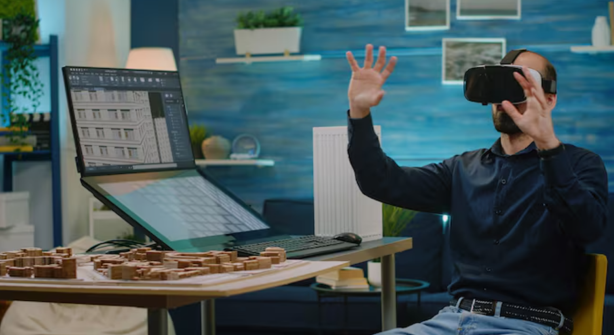
The Role of Virtual Tours in Enhancing Interactive Visualization and Design
Virtual tours have become an essential tool in modern visualization and design. As digital technologies continue to evolve, professionals across architecture, real estate, urban planning, education, hospitality, and product development increasingly rely on immersive visual experiences to communicate ideas more effectively. Virtual tours allow users to move through digital environments, explore spaces from different perspectives, and gain a deeper understanding of designs before physical implementation.
Unlike traditional static images or drawings, virtual tours create an interactive experience that encourages engagement and improves comprehension. They bridge the gap between technical design concepts and user understanding, making complex projects more accessible to clients, stakeholders, and end users.
Understanding Virtual Tours and Interactive Visualization
Virtual tours are digital representations of physical or conceptual spaces that allow users to navigate and explore environments interactively. These experiences can include panoramic imagery, three-dimensional models, animations, interactive hotspots, and informational overlays.
Interactive visualization refers to the presentation of information in a way that enables users to actively engage with content rather than simply viewing it. When combined, virtual tours and interactive visualization create powerful communication tools capable of conveying spatial relationships, design intent, and environmental context with remarkable clarity.
As organizations increasingly adopt digital workflows, virtual tours have emerged as a practical solution for presenting complex information in an intuitive format.
Why Visualization Matters in Modern Design
Visualization plays a critical role throughout the design process. Designers must communicate ideas clearly to a wide range of audiences, many of whom may not possess technical expertise.
Traditional methods such as blueprints, technical drawings, and static renderings often require specialized knowledge to interpret accurately. Virtual tours reduce this barrier by allowing viewers to experience a design as if they were physically present within the space.
This improved understanding can lead to better decision-making, more productive discussions, and fewer misunderstandings during project development. Stakeholders gain confidence in design proposals because they can see how spaces, materials, and layouts will function in realistic scenarios.
Enhancing User Engagement Through Immersion
One of the most significant advantages of virtual tours is their ability to create immersive experiences.
Immersion increases user engagement by transforming passive viewers into active participants. Instead of observing a design from a limited perspective, users can navigate freely, examine details, and explore areas that interest them most.
This interactive approach often leads to stronger emotional connections with a project. Whether evaluating a building design, exploring a museum exhibit, or reviewing a landscape plan, users tend to retain information more effectively when they are actively involved in the experience.
Creating a Sense of Presence
A well-designed virtual tour can generate a strong sense of presence, making users feel as though they are physically occupying the space.
This psychological effect is particularly valuable in design industries where scale, proportion, and spatial relationships are critical factors. Experiencing a space virtually allows users to better understand dimensions, circulation paths, lighting conditions, and overall atmosphere.
As a result, design evaluations become more accurate and meaningful.
Supporting Better Design Communication
Communication challenges are common in design projects. Designers often need to explain abstract concepts to clients, investors, regulatory agencies, and community stakeholders.
Virtual tours provide a shared visual reference that reduces ambiguity and promotes collaboration.
Instead of relying solely on verbal explanations or technical documents, project teams can demonstrate design ideas through interactive experiences. Users can explore spaces independently while designers guide discussions using visual examples.
This collaborative environment encourages constructive feedback and helps align expectations among all participants.
Reducing Misinterpretation
Misunderstandings can lead to delays, redesigns, and increased project costs.
Virtual tours help minimize these risks by presenting information in a realistic and accessible format. Stakeholders gain a clearer understanding of proposed designs, reducing the likelihood of incorrect assumptions.
When individuals can virtually walk through a project before construction begins, they are more likely to identify concerns, preferences, and opportunities for improvement early in the process.
Applications in Architecture and Interior Design
Architecture and interior design are among the fields that benefit most from virtual tour technology.
Designers can use immersive environments to showcase floor plans, furniture arrangements, material selections, and lighting concepts. Clients can evaluate design options before committing to costly construction or renovation decisions.
Virtual tours also allow users to compare multiple design alternatives efficiently. Different layouts, finishes, and configurations can be presented within the same digital environment, simplifying the decision-making process.
Improving Spatial Understanding
Understanding spatial relationships is essential in architecture and interior design.
Even highly detailed drawings may fail to communicate how a completed space will feel. Virtual tours provide a realistic perspective that helps users assess room proportions, circulation patterns, and visual connections between areas.
This enhanced understanding contributes to more informed choices and greater satisfaction with final outcomes.
The Relationship Between 3D Visualization and Virtual Tours
Virtual tours are often built upon advanced three-dimensional visualization techniques. Detailed digital models serve as the foundation for creating realistic environments that users can explore.
Many professionals begin with high-quality renderings before integrating interactive elements into a comprehensive tour experience. A rendering virtual tour combines realistic imagery with user-controlled navigation, offering a deeper level of engagement than static visualizations alone.
As modeling technologies continue to improve, virtual tours become increasingly accurate representations of future spaces and products.
Integration with Professional Visualization Workflows
The development of virtual tours frequently involves collaboration among designers, visualization specialists, and technical experts.
Teams may utilize various 3D rendering services to create detailed models and realistic visual assets that support immersive experiences. These assets can then be incorporated into interactive platforms that enable navigation, information access, and user customization.
The integration of rendering and interactive technologies helps organizations communicate design concepts with greater precision and effectiveness.
Benefits for Stakeholder Decision-Making
Decision-making often improves when stakeholders have access to comprehensive visual information.
Virtual tours provide an opportunity to evaluate projects from multiple perspectives before implementation. Users can examine details, compare alternatives, and explore scenarios that may not be easily communicated through traditional documents.
This enhanced transparency supports more confident decision-making and can reduce uncertainty throughout project development.
Facilitating Remote Collaboration
Modern projects frequently involve participants located in different regions or countries.
Virtual tours enable remote stakeholders to access the same visual information regardless of geographic location. Team members can review designs, provide feedback, and participate in discussions without requiring physical site visits.
This accessibility contributes to more efficient collaboration and supports increasingly global project environments.
Educational and Training Applications
Beyond design industries, virtual tours play a growing role in education and professional training.
Educational institutions use interactive environments to create engaging learning experiences. Students can explore historical sites, scientific facilities, architectural landmarks, and simulated environments without leaving the classroom.
Training programs also benefit from virtual tours by providing safe, repeatable learning opportunities. Participants can familiarize themselves with facilities, procedures, and equipment before entering real-world environments.
Enhancing Knowledge Retention
Research in educational psychology suggests that interactive learning experiences often improve information retention compared to passive observation.
Virtual tours encourage exploration and active participation, helping learners develop a deeper understanding of complex subjects. This engagement can lead to improved learning outcomes and more effective training programs.
Improving Accessibility and Inclusivity
Virtual tours can make spaces and experiences more accessible to diverse audiences.
Individuals who face mobility challenges, travel limitations, or geographic barriers can explore environments remotely. This expanded access allows organizations to reach broader audiences and provide inclusive experiences that might otherwise be unavailable.
Accessibility features such as descriptive content, navigation aids, and customizable interfaces can further enhance usability for a wide range of users.
As digital accessibility standards continue to evolve, virtual tours are becoming increasingly valuable tools for inclusive communication and engagement.
See also: The Importance of Cloud Technology for Modern Businesses
Future Trends in Interactive Visualization
The future of virtual tours is closely connected to advancements in digital visualization technologies.
Emerging developments in real-time rendering, immersive environments, artificial intelligence, and spatial computing are expected to expand the capabilities of virtual experiences. Future virtual tours may offer higher levels of realism, personalization, and interactivity than ever before.
Users may be able to customize environments dynamically, evaluate design changes instantly, and interact with digital spaces in increasingly natural ways. These innovations will further strengthen the role of virtual tours as communication and decision-support tools.
Greater Integration Across Industries
As technology becomes more accessible, virtual tours are likely to be adopted across a broader range of industries.
Healthcare, manufacturing, retail, tourism, education, infrastructure planning, and cultural preservation are already exploring new applications for immersive visualization. The ability to communicate complex information through interactive experiences will continue to drive adoption in both public and private sectors.
Conclusion
Virtual tours have transformed the way organizations communicate, evaluate, and experience design concepts. By combining immersive navigation with interactive visualization, they provide a powerful method for understanding complex spaces and ideas.
Their ability to enhance engagement, improve communication, support collaboration, and facilitate informed decision-making makes them an increasingly important component of modern design workflows. As visualization technologies continue to advance, virtual tours will play an even greater role in helping professionals and audiences explore, understand, and interact with the built and digital environments of the future.