Setting vs. Finishing Spray: What’s the Difference?
In the UAE, skin makeup is exposed to harsh weather conditions. There is heat and humidity.
The long days, which start early and end late, make things worse. In this situation, a good makeup spray is not an extra step, but rather a necessity.
Still, the terms create confusion. Setting spray and finishing spray are often treated as the same product. However, their roles are different, and knowing that helps avoid disappointment.
Role of a Setting Spray
It determines how the makeup looks on the skin.
After applying foundation and powder, the face may look dry or textured. It is when a fine mist can soften the surface. This makeup spray allows the products to settle. Consequently, the finish looks more even and less layered. So, the makeup looks like it belongs on the skin instead of resting over it.
Many setting spray formulas are light and fluid. Some also include ingredients that support hydration. This helps reduce that tight or overly matte appearance.
What It Helps With
- Softening excess powder
- Easing visible dryness
- Bringing foundation and powder together
- Creating a more natural surface
- Reviving makeup later in the day
A setting spray refines texture. It is not designed for extreme durability in high humidity.
How It Is Used
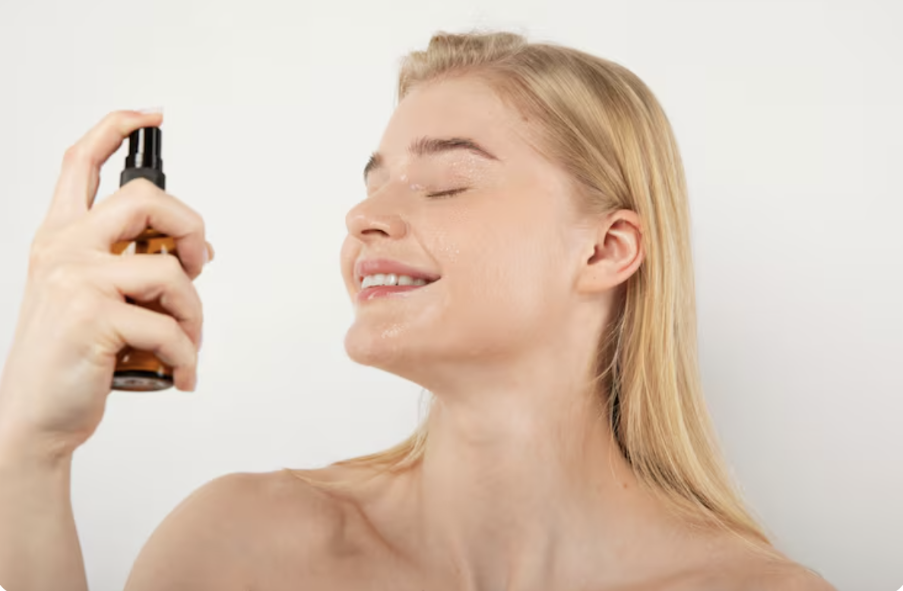
- Hold the bottle a few inches away from the face.
- Spray lightly.
- Keep it even.
- Let the product settle.
- If needed, press gently with a sponge to smooth areas that look heavy.
Setting spray can be applied after base products or once the full look is complete, depending on preference.
What a Finishing Spray Is Designed For
A finishing makeup spray addresses longevity.
It is applied after everything is done. So, a finishing spray helps hold the makeup in place.
Finishing spray forms a thin layer on the skin. It helps reduce movement caused by sweat, oil, or moisture in the air.
What It Helps With
- Extending wear through long hours
- Limiting smudging
- Managing shine
- Reducing transfer onto clothing
- Helping makeup remain stable in the heat
A finishing spray protects the result. It does not improve blending.
Setting Spray Vs. Fixing Spray
- Setting spray adjusts how the makeup sits, whereas a finishing spray helps it stay put.
- Setting spray improves the look, whereas a finishing spray improves the wear.
So, these are two complementary products, not substitutes.
Using Both in One Routine
Both can be used together when needed.
- Start with a foundation
- Use concealer to cover blemishes and dark spots
- Set it all with a powder
- Mist the setting spray to soften the finish
- Let it dry
- Continue with the eye makeup
- Finish with the lip products
- Conceal it all with the setting spray
This sequence ensures the surface looks balanced before being sealed.
See also: Online Engineering Assignment Help for Stress-Free Learning
Choosing According to Skin Type
Oily skin often benefits from a finishing spray that controls shine. Dry skin typically responds better to a setting spray that reduces visible dryness.
Combination skin may use both, applying the locking spray mainly to oil-prone areas.
Sensitive skin should approach strong formulas with caution.
Common Errors
- Do not spray too close to the skin. It can shift the foundation.
- Do not apply a lot of the product. It can leave a residue.
- Let the product dry. Layering before drying can reduce effectiveness.
A light hand produces better results.
To Sum It Up
Setting spray and finishing spray serve separate purposes. In climates where makeup is exposed to heat and humidity, this distinction matters.
If the aim is a smoother, more natural finish, a setting spray is appropriate. If long wear is the priority, a finishing spray offers stronger support.
Understanding the role of each makeup spray allows better choices and more reliable results throughout the day.